Qualify for an investment property loan using the rental income the property itself generates — not your tax returns, W-2s, or personal income. Here is how DSCR loans work, what lenders require, and how investors scale a portfolio with them.
Saman Khanian
Author & Mortgage Professional
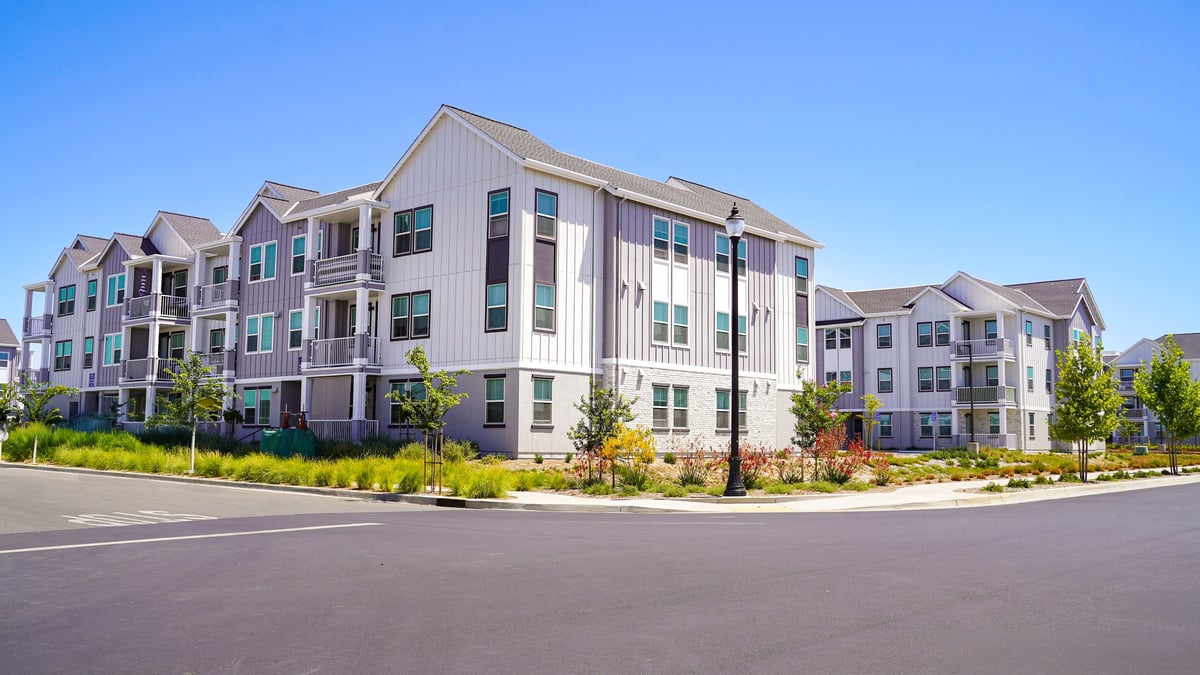
No Tax
Returns or W-2s required
Qualify on property cash flow

A DSCR loan is an investor-focused, Non-QM mortgage that qualifies you using the property's rental cash flow rather than your personal income. Instead of tax returns and W-2s, lenders calculate the Debt Service Coverage Ratio (DSCR) — the property's income divided by its total mortgage payment. If the numbers cover the debt, the loan can be approved.

No personal income runs through the file — the property has to pay for itself.
"No income verification" does not mean no underwriting. It means the lender verifies the property instead of your paycheck. Your tax returns, W-2s, and personal income statements are not used to qualify.
No tax returns required. The property's rental income — from a lease, rent roll, or market rent appraisal — is the qualifying source.
No W-2s or pay stubs. Your job, employer, and personal income are not part of the qualification math.
Credit, assets, and the property still matter. Lenders review your credit score, reserves, down payment, and the property's appraisal — just not your personal income.
The DSCR compares the property's rental income to its total mortgage payment (principal, interest, taxes, insurance, and HOA if applicable). A ratio of 1.0 means the rent exactly covers the payment.
The DSCR Formula
Monthly Rental Income
Total Monthly Debt Payment
DSCR Ratio
Example Scenario
$2,400
Monthly rent
$2,000
PITIA payment
1.20
DSCR (qualified)
A 1.20 DSCR means the property generates 20% more rent than it needs to cover its debt — a commonly requested ratio for the best pricing.
Ratios vary by lender. Some allow DSCR below 1.0 with larger down payments or reserves, while 1.0–1.25 or higher typically unlocks better rates. Because qualifying is based on the property, DSCR loans are far more flexible for investors than conventional financing.
Since personal income is out of the equation, lenders focus on credit, equity, reserves, and the property's cash flow.
Many programs start around 620–660, with the best pricing for scores of 700+.
Typically 20–25% of the purchase price, with lower DSCR often requiring more down.
Lenders often want a few months of payments in reserves after closing.
Long-term rentals, short-term rentals, and 2–4 units are commonly eligible.
| DSCR Range | What It Usually Means |
|---|---|
| 1.25 or higher | Strong coverage; best pricing and terms |
| 1.00 – 1.24 | Rent covers the payment; widely acceptable |
| 0.75 – 0.99 | Rent falls short; larger down payment may be required |
| Below 0.75 | Fewer lenders; stronger reserves needed |
These are general ranges for illustration only. Guidelines vary by lender, borrower, property, and state — your loan officer can confirm what you qualify for.
A DSCR file is generally leaner than a conventional loan because personal income documentation is replaced by property cash-flow verification.
Exact requirements vary by lender and scenario. Always confirm with your loan officer.
DSCR financing is designed for real estate investors who want to grow a portfolio without their personal tax picture standing in the way.
Business owners whose write-offs lower their taxable income but who have strong rental cash flow.
Investors scaling beyond the standard limit of financed properties that conventional loans impose.
Investors who buy and hold property in an LLC or corporation for asset protection and privacy.
Airbnb and VRBO operators who can qualify using projected short-term rental income.
International investors without U.S. tax returns who are purchasing U.S. rental property.
Borrowers who want a simpler, document-light process and faster closings than a full-doc loan.
No tax returns needed — get personalized DSCR options from Equitable Lending.
DSCR loans are powerful for the right investor — but like any product, they come with trade-offs worth understanding.
The takeaway: if you are an investor who wants to scale, keep your personal finances private, and let each property stand on its own numbers, a DSCR loan is one of the most flexible tools available.
Answers to the questions investors ask most about no-income-verification DSCR financing.
Saman Khanian is a mortgage professional and the CEO of Equitable Lending, where he helps real estate investors, business owners, and self-employed borrowers find financing solutions that fit their real financial picture. He writes about DSCR and Non-QM lending, portfolio scaling, and alternative income documentation.
Disclosure: This article is for informational purposes only and does not constitute a loan commitment, rate quote, or financial advice. DSCR (Non-QM) mortgage guidelines, rates, fees, and eligibility vary by lender, borrower, property, and state. All loans are subject to credit approval and underwriting. Equitable Lending is a licensed mortgage lender — see our Licensing Information page. Contact a licensed loan officer to discuss your specific scenario.
No tax returns. No personal income verification. Find out what your rental property qualifies for with a DSCR loan from Equitable Lending — no obligation.
Go deeper on DSCR, investor financing, and no-income-verification mortgage strategies.

A full breakdown of DSCR loan requirements, current rates, and how to qualify in 2026.
Read more
Understand financed-property limits, LLC stacking, and how to scale a rental portfolio.
Read more
How entity vesting works, why investors use LLCs, and what it takes to qualify.
Read more