Buying a House After Divorce:Alimony, Child Support & Mortgage Approval
Buying a house after divorce is possible — and often the start of your next chapter. Support payments can count as income, some marital debts may be excluded, and several loan programs can fit a single-income household. Here is how lenders look at your situation, and what to line up before you apply.


Yes — buying a house after divorce is common and well within reach for many borrowers. Lenders do not penalize a divorce by itself. What matters is how the financial picture looks after the split: your documented income, including alimony and child support when they meet the lender's rules, your share of the marital debts, and your credit. With the right documents and the right loan program, a single-income household can qualify.
Alimony and child support can qualify when documented and stable
Marital debts assigned to your ex may be excluded, with the right proof
Conventional, FHA and non-QM loans all have a place for post-divorce buyers
Can You Buy a House After a Divorce?
Buying a house after divorce is one of the most common life events behind a new mortgage application. Whether you are keeping the marital home or starting fresh somewhere new, the lender's task is the same: confirm you can afford the payment on your own — or with qualifying support income — over the long term.
The practical answer depends on your debt-to-income ratio, your credit history, and whether the income and support you rely on can be documented the way the program requires. A pre-approval review before you shop is the fastest way to know where you stand.
Apply Now
A finalized settlement with clear support terms makes qualification more predictable.
Divorce is not a disqualifier
No program rejects an application simply because the borrower is divorced. Underwriters look at the income, debts, assets and credit you bring to the new loan.
One income can be enough
A single income — plus documented support payments when eligible — can be sufficient to qualify, depending on the home price, the loan program and your overall financial profile.
Timing usually follows your income, not your marital status
What often matters is how long your post-divorce income and support have been established, and whether the dissolution is final. Your loan officer will confirm what applies to you.

Do Alimony and Child Support Count as Income?
In most standard programs, alimony and child support can count as qualifying income when they are documented, received regularly, and expected to continue. This is one reason buying a house after divorce does not have to depend on your paycheck alone.
The lender's core question is not the amount — it is reliability. Lenders generally look for:
- A written court order or a fully executed settlement agreement
- A consistent payment history over a meaningful period, often at least six months
- Evidence the support will continue — typically at least three years (some programs use a different minimum)
- Child support that continues only while a child is a minor, which can shorten the remaining term
Important: your lender must have your written permission to count alimony or child support income. Many applications ask you to check a box. If you prefer not to disclose it, the loan will be qualified on your other income. Guidelines and minimum duration rules vary by program and investor — your loan officer will confirm the exact test for your file.
How Lenders Count Debts After a Divorce
Your debt-to-income ratio compares your monthly obligations to your gross monthly income. After a divorce, which debts are attributed to you matters a great deal — a joint credit card or car loan that your ex agreed to pay may still appear on your credit report until it is refinanced or paid off.
What Lenders Generally Consider
| Debt | Typical treatment | What helps |
|---|---|---|
| Joint debts you co-signed | Usually counted on your DTI unless documented otherwise | Settlement showing your ex is responsible, plus payment proof — ask your loan officer which documents apply |
| Marital home mortgage | Counted if your name remains on the loan, even if you no longer live there | Refinance out of the loan, a completed assumption, or documented treatment per program |
| Alimony you pay | Generally counted as a monthly obligation | Provide the court order so the lender sees the exact amount |
| Student loans or car loans in your name | Counted as usual | Pay down balances to improve your ratio before applying |
General overview only. Each investor applies its own debt rules, and exclusions typically require specific documentation. Learn more in our debt-to-income guide.
How Soon After a Divorce Can You Buy a House?
There is generally no blanket waiting period that applies to every divorce. Buying a house after divorce tends to come down to when your financial picture — income, support, debts and credit — is documentable. In practice, most borrowers move through three stages before a purchase closes.
Settlement finalized
A finalized decree or settlement gives the lender clear, enforceable support terms and a clean picture of who owes what.
Income established
Lenders look at how long your post-divorce income — and any support payments — has been in place and documented.
Pre-approval review
A loan officer models your DTI, credit and documentation against program guidelines before you make an offer.
Pending divorce
Before a decree is final, the lender may require a signed separation agreement, the divorce filing, or additional terms to show how debts and support will be handled. Timing and requirements depend on the program.
Finalized divorce
With a final court order and documented support, some borrowers can qualify quickly — especially when they already have steady income. Ask a loan officer to review your timeline before you start house hunting.
Which Mortgage Programs Fit a Post-Divorce Buyer?
The best fit depends on your income type, down payment, credit and the size of the loan. This summary reflects the general approach — guidelines change, and a loan officer will confirm the exact rules for your file.
| Program | How it generally fits | Learn more |
|---|---|---|
| Conventional | Alimony and child support generally count as income when documented and expected to continue. Debt attribution follows investor guidelines. | Conventional requirements |
| FHA | Support income is commonly counted with a court order and payment history. FHA's minimum remaining-duration rules apply to that income. | FHA & VA programs |
| VA | Eligible veterans, surviving spouses and eligible borrowers may qualify. Support income is reviewed under VA guidelines. | VA requirements |
| Jumbo | Higher loan amounts in high-cost markets like Los Angeles often bring stricter documentation and reserve requirements. | Jumbo requirements |
| Non-QM / Bank Statement | Alternative documentation programs can be a fit when income is uneven or self-employed — such as a business owner rebuilding after a divorce. | Bank statement loans |
General overview only. Individual investors and loan programs set different rules, and eligibility depends on your full application.
Alimony and Child Support in a Mortgage Calculation
Consider a hypothetical borrower with a $7,500 monthly salary, plus $2,200 a month in documented alimony and child support from a final court order. She wants to buy a $650,000 home with a 10% down payment.
Illustrative qualifying income
- Salary
- $7,500 / mo
- Alimony + child support
- $2,200 / mo
- Gross monthly income
- $9,700 / mo
- At a 43% debt-to-income ratio, $9,700 supports roughly $4,171 in total monthly obligations (principal, interest, taxes, insurance and other debts).
- At a 50% ratio, the same income supports roughly $4,850.
- Whether the support income is counted depends on the program's documentation and duration rules — the example assumes it is eligible.
Why this matters: including eligible support income can meaningfully raise a borrower's price range when buying a house after divorce. Ask your loan officer to model the payment, taxes, insurance and reserves for the exact home you are considering.
All figures are hypothetical for illustration only and do not represent an approval, rate or specific guidelines.

Documents to Prepare After Your Divorce
Organized documents make underwriting smoother — and a clean file is often the difference between a fast approval and a drawn-out one. For a full list, see our mortgage application documents checklist.
Court order or settlement
The final divorce decree or signed settlement showing support amounts, payer and duration.
Support payment records
Bank statements or payment records showing a consistent history of alimony and child support received.
Income documents
Pay stubs, W-2s or tax returns for your own income, matched to how you are paid.
Marital debt documentation
Whatever the program requires to show debts assigned to your ex — settlement terms, payoff letters or transfer records.
Credit explanation
A brief letter explaining any post-divorce credit changes, such as accounts closed or transferred.
Asset statements
Bank and investment statements showing your down payment, closing funds and reserves.
Wondering what you qualify for after your divorce?
We'll review your income, support and debts before you apply.
Common Mistakes When Buying a House After Divorce
A divorce reshapes your finances, and a few avoidable missteps can delay a purchase or lower your price range. They are easy to fix when you know about them before you apply.
The right loan officer will flag these before they become problems — and help you build the strongest possible file.
Apply NowCounting support you can't prove
Support must be in a court order and paid consistently. Informal arrangements are much harder for a lender to use.
Ignoring joint debts
A debt your ex agreed to pay still counts on your DTI until it is documented, refinanced or paid off.
Buying before the numbers settle
Shopping before you know the support duration and debt allocation can put you in a home you cannot qualify for.
Applying for new credit
Opening cards or car loans while your file is in underwriting can push your DTI or credit score the wrong way.
Get a pre-approval first
A pre-approval review shows exactly what your post-divorce income supports — before you make an offer.
Keep your settlement handy
A complete, final settlement with clear terms is one of the strongest documents in a post-divorce file.
Frequently Asked Questions
Common questions about buying a house after divorce and qualifying with support income.
Can I buy a house after a divorce?
Yes. Buying a house after divorce is common, and no loan program disqualifies borrowers simply because they are divorced. Lenders evaluate your income, debts, assets and credit. Support income and the treatment of marital debts often determine how much house you can afford.
Does alimony count as income for a mortgage?
Often, yes. Most standard programs can count alimony as qualifying income when it is established by a court order or settlement, has been received consistently, and has a documented continuation period. Your lender needs your written permission to use it, and the exact rules depend on the program.
Does child support count as income for a mortgage?
Child support can often be counted when it is documented and expected to continue. Because child support typically ends when the child reaches a certain age, the lender checks the remaining duration against the program's requirement. Your loan officer will confirm how the remaining term applies to your file.
How long do I need to receive alimony or child support before it counts?
Lenders generally look for a consistent payment history — commonly about six months — along with evidence the support will continue for a set period. Minimum duration requirements vary by loan program and investor, so confirm the rule that applies to your scenario.
Do I have to wait before buying a house after divorce?
There is generally no universal waiting period. What matters is having a finalized settlement, documented income and support, and a debt picture the lender can evaluate. In some cases, buying during a pending divorce is possible with additional documentation, depending on the program.
Do my ex-spouse's debts affect my mortgage qualification?
They can, if your name is still on the accounts. A joint loan your ex agreed to pay may still be counted in your debt-to-income ratio until it is refinanced, paid off or documented in a way the program accepts. Review joint accounts with your loan officer before applying.
Can I keep the house after a divorce?
If you keep the home, the mortgage still needs to be affordable and properly documented in your name. Many borrowers refinance into a loan in their own name, or complete an assumption where the program allows it, so that the former spouse is released from the debt. Guidelines vary.
What if my income is lower after the divorce?
A lower income narrows the price range, but loan programs, down payment options and proper documentation still leave paths. Options such as FHA, conventional loans with lower down payments, or non-QM programs for self-employed borrowers may fit. A pre-approval review shows exactly what your current income supports.
Does a pending divorce make buying harder?
It can add documentation. Lenders may require a signed separation agreement, the divorce filing, or additional terms showing how debts and support will be handled. The exact requirements depend on the program and the investor.
What documentation do I need if I'm using support income?
Typically: the final divorce decree or signed settlement, records showing consistent payments (such as bank statements), and your written permission for the lender to count the support. Your loan officer will provide the exact list for your program.

Saman Khanian
Chief Executive Officer, Equitable Lending
Saman Khanian leads Equitable Lending and works with borrowers through life's biggest financial transitions — including buying a home after a divorce. He writes about income documentation, qualifying with alimony and child support, and the full range of loan programs, from FHA and conventional to jumbo and non-QM.
Disclosure: This article is for educational purposes only and does not constitute a commitment to lend, a loan offer, or financial, legal or tax advice. Eligibility and approval depend on the lender's underwriting guidelines, your credit profile, income and support documentation, assets and other individual qualifications. Income, alimony and child support requirements vary by loan program and are subject to change without notice. Consult a qualified attorney or tax professional for guidance on your specific divorce settlement. Equitable Lending, NMLS #1124483, DRE #01941713. Equal Housing Opportunity.
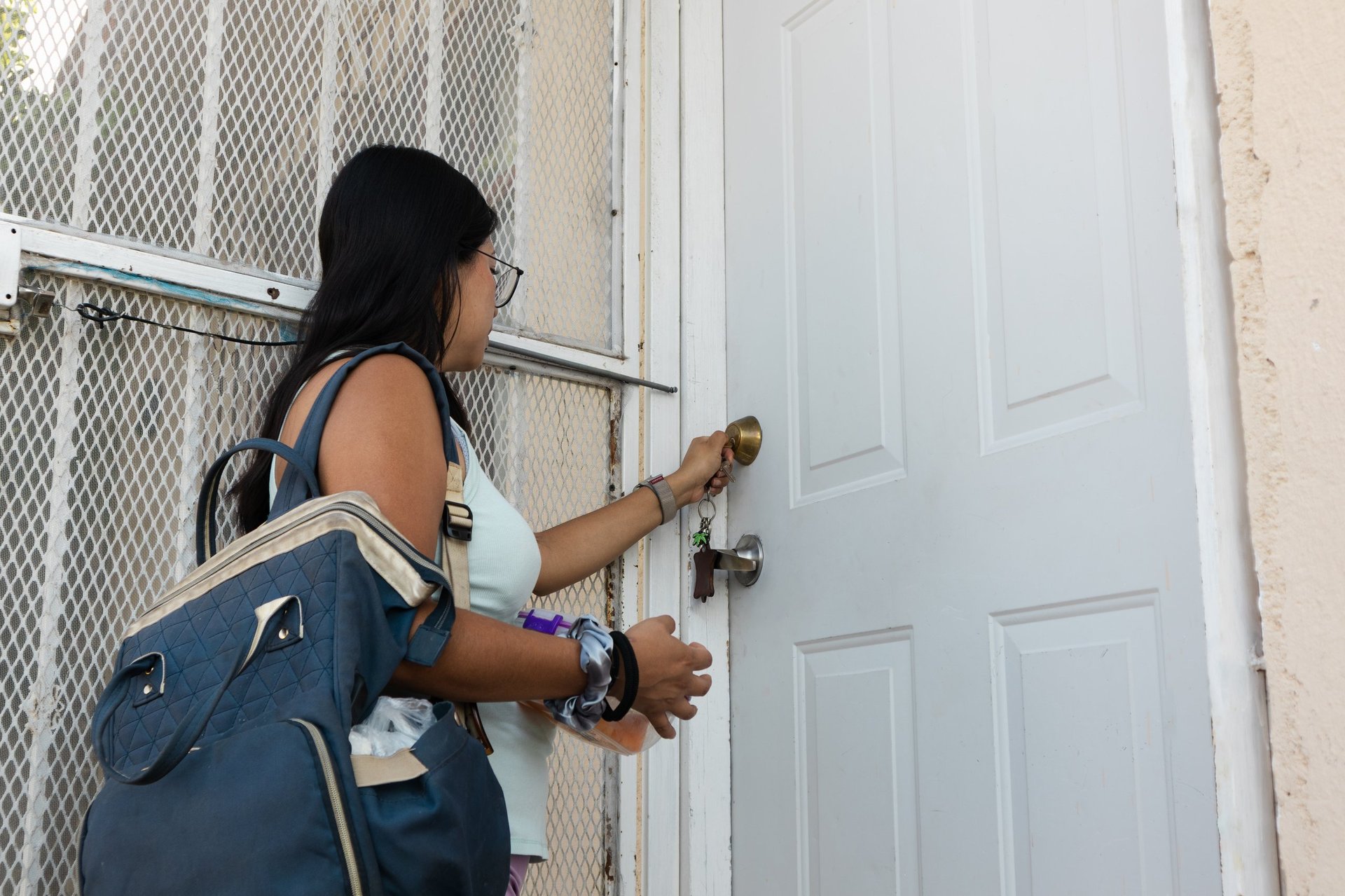
Your Next Chapter.
Let's Make It a Home.
Tell us about your income, your support payments and your goals. We'll explain which programs fit — and what documents you'll need — before you apply.